Finding Digital Marketing Services Near Me: Agency Checklist
12/19/2025
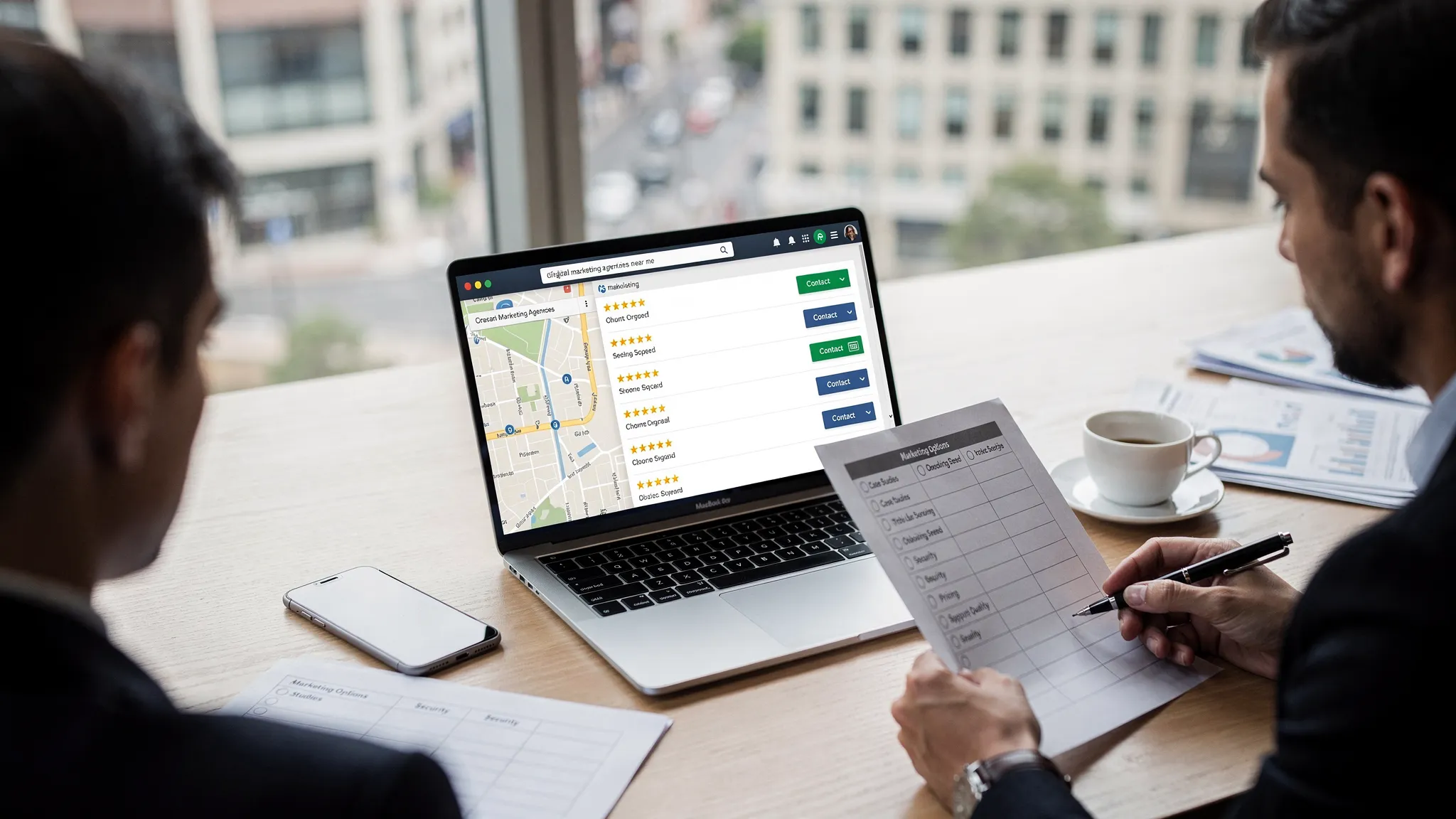
You can Google “digital marketing services near me” and get dozens of options in seconds. The harder part is picking a partner that proves ROI fast, protects your data, and is ready to work the moment you say yes. Use this practical checklist to shortlist local agencies in under an hour, run apples‑to‑apples evaluations, and choose with confidence.
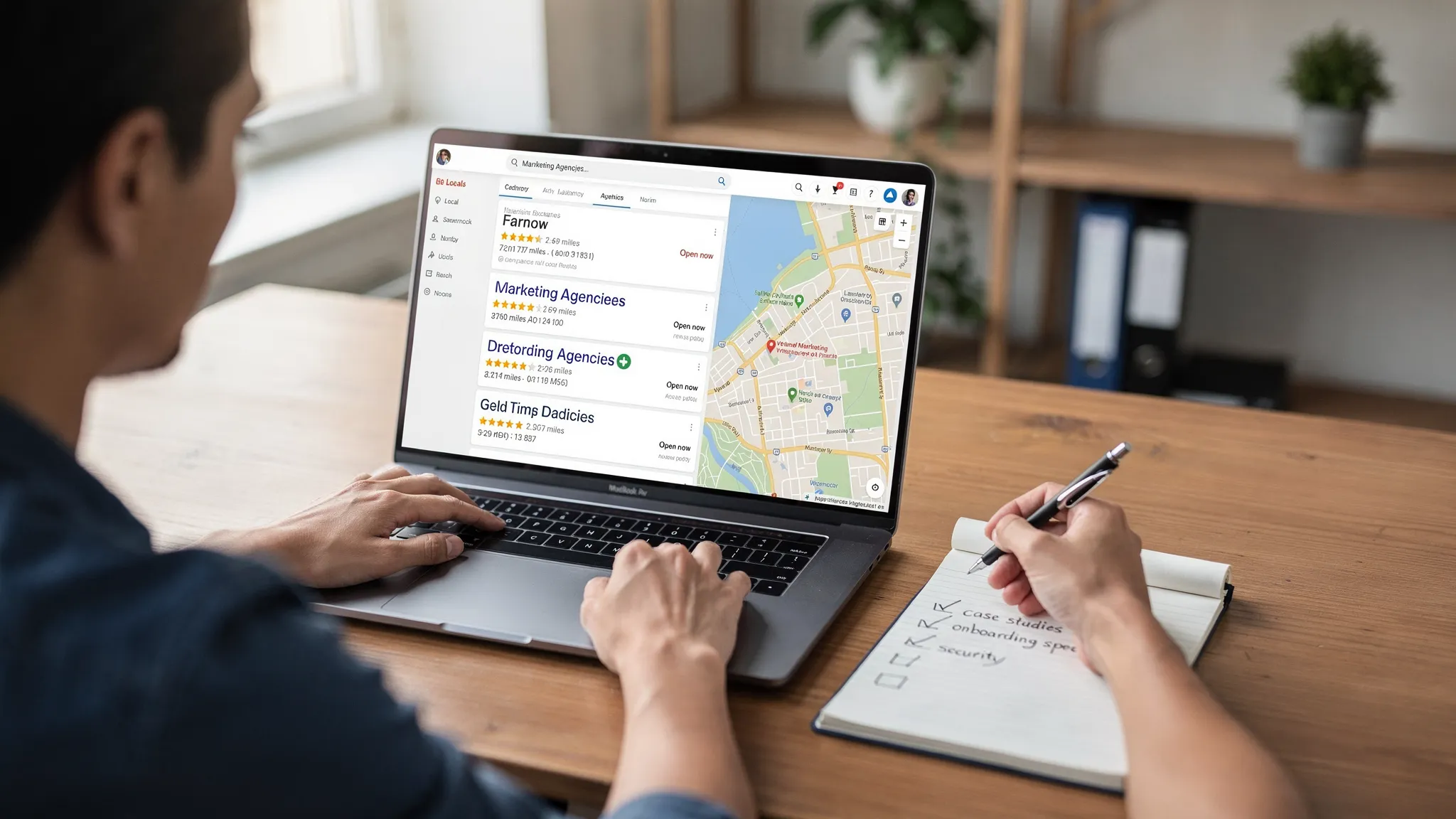
Why the “near me” factor matters in 2025
Local proximity can speed collaboration and understanding of your market, especially if you rely on geo-targeted ads, local SEO, store visits, or multi-location campaigns. A nearby team can meet on site when needed, align on regional nuances, and act faster when something breaks. Trust still runs through social proof though, not just street addresses. BrightLocal’s ongoing research shows the vast majority of consumers read online reviews for local businesses, which means your due diligence should blend proximity with proof, process, and performance. See the latest Local Consumer Review Survey.
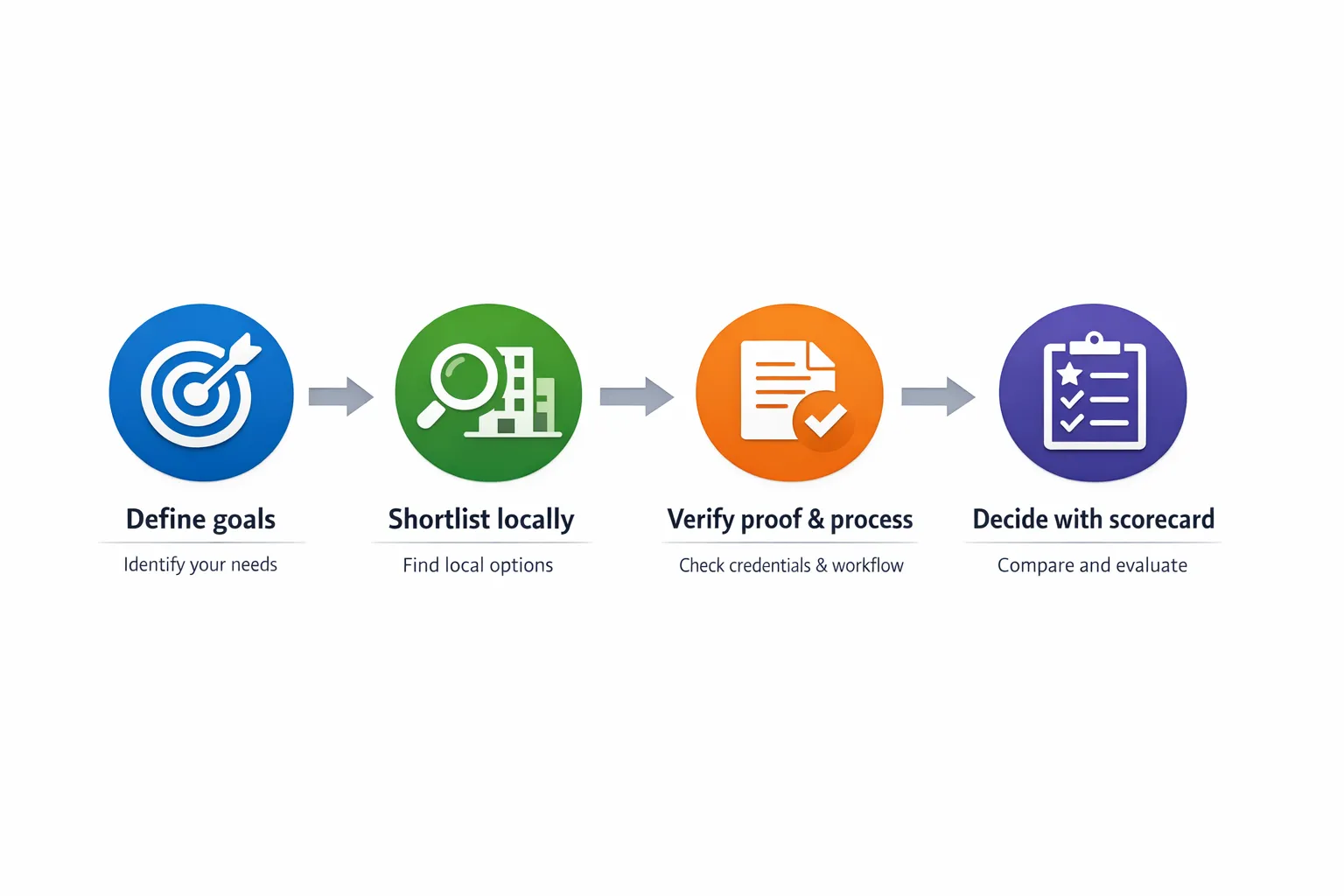
Fast shortlist, 20-minute method
- Define outcomes and constraints, for example leads, ecommerce revenue, cost caps, compliance, and timeline.
- Search your city plus service keywords, then scan Google Business Profiles for ratings, review volume, and responsiveness.
- Open 5 agency sites, look for recent case studies with numbers, named logos, and clear service scope.
- Check the team and process page, you want named practitioners, not just buzzwords.
- Send a concise brief and request a discovery call slot within 72 hours.
The agency checklist, what to verify before you sign
1) Fit to your goals and channels
A strong agency can say exactly how they will move your metric, not just the tactic they will execute.
- Ask for a simple plan that ties channel, budget, creative, and timeline to your one or two primary KPIs.
- Look for alignment with your motion, for example lead gen with CRM handoff, ecommerce with feed and conversion accuracy, local SEO with GBP optimization.
2) Proof of performance you can trust
Proof beats promises.
- Request two relevant case studies that show baselines, the intervention, and post metrics.
- Ask for at least one reference you can call, ideally in your industry or region.
3) Local credibility and availability
Local presence should translate to real access and context.
- Verify a physical address or service area, same time zone, and meeting availability.
- Scan recent local reviews for mentions of responsiveness and communication quality.
4) Team, roles, and coverage
You need clarity on who actually does the work.
- Confirm named roles, for example strategist, media buyer, creative, analyst, and their weekly time budget for your account.
- Ask about coverage during holidays and after-hours incidents.
5) Data, tagging, and integrations
Success depends on clean measurement.
- Confirm GA4, tag management, server-side or conversions API plans, and how they will validate events.
- Check that your CRM or ecommerce platform will be connected, and who owns that integration.
6) Onboarding speed and experience
Onboarding is where most “near me” wins are lost. You want fast, secure access without password sharing.
- Ask how long it takes them to get access to your Ads, Analytics, Tag Manager, and social assets.
- Look for a single, branded onboarding link that captures the exact permissions they need, uses OAuth where available, and auto-routes details into their PM or CRM so work starts immediately. A clean, guided three-step experience with visible trust indicators is ideal, for example this kind of clean three step demo page shows how simplicity and trust signals can reduce friction.
7) Security and governance
Protect your accounts from day one.
- Require least-privilege permissions, enforced 2FA, and a written offboarding process.
- Never share passwords over email or chat, partner or user-based invites only.
8) Reporting rhythm and transparency
You should know what happened, why it happened, and what is next.
- Agree on a weekly or biweekly cadence, a monthly business review, and who receives alerts when KPIs move.
- Ask for dashboard samples and a baseline audit within the first two weeks.
9) Scope, pricing, and terms
Clarity prevents frustration.
- Define included deliverables, change request rules, and billing triggers.
- Confirm who pays platform costs, creative production, and third party tools.
10) SLAs and support
Incidents happen, response matters.
- Document response times for critical issues, escalation paths, and backup contacts.
Due diligence table you can reuse
| Criterion | Why it matters | What to ask | Evidence to collect |
|---|---|---|---|
| KPI alignment | Focuses effort on outcomes, not vanity metrics | Which two KPIs will you own for the first 90 days | Written plan with KPI definitions |
| Relevant proof | Reduces execution risk | Two case studies similar to my size and industry | PDFs or links with baselines and after metrics |
| Local availability | Faster feedback and context | Who will meet me locally or on video, and when | Calendar holds for weekly sync |
| Team clarity | Ensures you are not over-assigned | Who does what and time allocation | Org snapshot with named roles |
| Clean measurement | Prevents wasted spend | How will you set up GA4, tags, and CAPI | Tracking plan, access checklist |
| Onboarding speed | Shortens time to first value | How long to gain asset access, what is the process | A single onboarding link or checklist with dates |
| Security posture | Protects your brand and data | Least privilege, 2FA, offboarding steps | Policy summary and access matrix |
| Reporting | Keeps you informed and agile | Frequency, dashboard, alerting | Sample report and schedule |
| Scope and terms | Avoids scope creep | What is in, what is out, how to change | SOW and MSA language |
| Support SLAs | Limits downtime | Response and escalation timelines | SLA document |
What to bring to your discovery call
- A one page brief, business model, ICP, top three goals, constraints, and success definition.
- Platform access status, which accounts exist, who owns them, and what is missing.
- Creative assets inventory, top performing offers, and any legal or compliance notes.
- Budget envelope and the date you want campaigns live.
Red flags to watch for
- No named team, only a sales contact.
- Vague promises without numbers or timelines.
- Password sharing or requests for ownership transfer without reason.
- Reporting that focuses only on impressions or reach, not conversions or revenue.
- A complicated kickoff that takes weeks before access is sorted.
Make the call with a simple scoring model
Give each category up to 10 points based on the checklist above. A score of 80 or higher usually indicates a partner ready to execute. If two agencies are close, use onboarding speed as the tiebreaker, the agency that can start safely and immediately often creates value sooner.
Why onboarding speed is a make or break
Even with a great local partner, campaigns stall without the right access to your assets. Delays of one to two weeks are common when permissions, IDs, and platform invites are handled manually. A single, branded link that requests only the permissions required, supports multiple platforms, and routes outcomes into a dashboard means work can begin in minutes, not days. This protects your security posture and accelerates your first tests, which is especially valuable for seasonal or promotion driven businesses.
If you run an agency, building this frictionless start is one of the fastest ways to win local deals and keep them. Standardize your intake, give clients a branded experience, and remove guesswork around permissions.
Frequently asked questions
Is a local agency always better than a remote one? Location helps with speed and context, especially for brick and mortar and multi-location brands. If a remote agency shows stronger proof, a faster onboarding process, and clear availability in your time zone, choose the one that best aligns with outcomes.
How many agencies should I meet before deciding? Three is usually enough for a balanced view. Use the same brief, ask the same questions, and score them on the same checklist so the comparison is fair.
What timeline should I expect to see results? It depends on your channel mix and baseline. Many engagements show leading indicators within the first 2 to 4 weeks, for example better tracking, creative testing, and early conversion learnings, then more stable performance trends by 60 to 90 days.
What should onboarding include? A clear access plan for Ads, Analytics, Tag Manager, and social platforms, least privilege permissions, enforced 2FA, and a kickoff schedule that includes measurement validation and a first test plan.
How do I validate an agency’s security posture? Ask for a short policy summary, confirm least privilege and 2FA, and require a written offboarding process that removes access within a defined timeframe.
Can I start with a pilot? Many agencies offer a limited scope pilot. Make sure KPIs, budgets, and timelines are written down, and that pilot learnings will roll into a longer-term plan if you proceed.
Deliver the best first impression with one-link onboarding
If you are an agency that wants to win more “near me” searches and start work faster, Connexify gives you a single branded link that collects the right permissions across platforms, no installation required. You can customize permissions, white-label the experience, use APIs and webhooks to push data into your tools, and manage everything from a user-friendly dashboard. It is secure by design and takes minutes to set up. Start with a 14-day free trial or book a demo to see how you can reduce onboarding time from days to seconds.