Advertise Services: A Simple System to Get Leads This Month
02/10/2026

Most agencies don’t have a “lead problem.” They have a system problem.
When you try to advertise services with five offers, three audiences, and two channels at once, you create scattered messaging, weak conversion rates, and a pipeline that never feels predictable.
Below is a simple, repeatable system you can implement in the next few days to generate qualified leads this month, without rebuilding your entire business.
The simple rule: one offer, one audience, one channel, one next step
If your goal is leads this month (not “brand awareness someday”), your marketing has to do three jobs extremely well:
- Match existing demand (people already looking for what you do)
- Convert that demand (a clear page and call-to-action)
- Close without friction (fast response and a clean handoff)
That’s it. Everything else is optional.
To make it operational, use the 5-part system below.
The 5-part lead system (use this as your weekly checklist)
| System part | What it is | Why it matters for “this month” leads |
|---|---|---|
| Offer | A narrow promise for a specific buyer | Clarity increases clicks and bookings |
| Proof | 1–3 pieces of credibility tied to the offer | Reduces perceived risk fast |
| Page | One landing page with one CTA | Converts attention into a booked call |
| Distribution | One channel you commit to for 30 days | Consistency beats “random acts of marketing” |
| Follow-up + onboarding | Speed-to-lead and frictionless Day 0 handoff | More deals closed, fewer stalled starts |
If you only implement one improvement from this article, implement the last one. Many agencies spend money getting leads, then lose the deal or momentum after the “yes” because onboarding is slow.
Step 1: Productize a “this month” offer (don’t advertise your full menu)
Advertising “digital marketing services” (or any broad service category) usually leads to vague leads. The fix is to advertise a specific outcome and a specific starting point.
A good “this month” offer has four traits:
- Fast to start (no long discovery phase required)
- Easy to say yes to (low perceived risk)
- Tied to a measurable deliverable (a plan, a build, a launch, a fix)
- Naturally expands into your retainer or longer engagement
Examples that tend to work for agencies and service providers:
- Tracking and measurement readiness sprint (GA4, GTM, Meta Pixel/CAPI checks)
- Search ads quick-start build (campaign structure + first launch)
- Paid social account audit with a 30-day action plan
- Landing page teardown + rebuild plan (with prioritized fixes)
- Creative testing kit (hook library + 10 concepts + testing plan)
Write your offer as an “Offer Card” (one paragraph). Here’s the template:
For (specific buyer)
Who want (specific outcome)
We deliver (deliverable) in (time window)
So you get (measurable result or decision)
Start with (single CTA: book call, request audit, get quote)
This copy will become your ad, your landing page headline, and your follow-up email.
Step 2: Build one landing page that can carry the whole month
If you send paid clicks to your homepage, you are paying for confusion. For lead generation, you want a single landing page for a single offer.
A high-converting service landing page is not long, it is specific. Aim for these blocks:
Above the fold (the first screen)
- Headline: the offer outcome
- Subhead: who it’s for, what’s included, and the timebox
- CTA: book a call or request the audit (one option)
- Trust cue: a short line like “Worked with B2B SaaS and local services teams” (only if true)
The credibility section
Use proof that matches the promise. Choose from:
- A short case study paragraph with numbers (only real numbers)
- Screenshots of anonymized results (if permitted)
- Logos (only clients who approved)
- A short testimonial focused on speed, clarity, or outcomes
The process section
Keep it simple, but concrete:
- What happens after someone books
- What you need from them
- When they should expect the first deliverable
The “risk reversal” section
Examples:
- Clear scope boundaries (what’s included, what is not)
- A deliverable guarantee (for example, “You will receive X by Y date”)
- A transparent starting price or “from” price (optional, but often helpful)
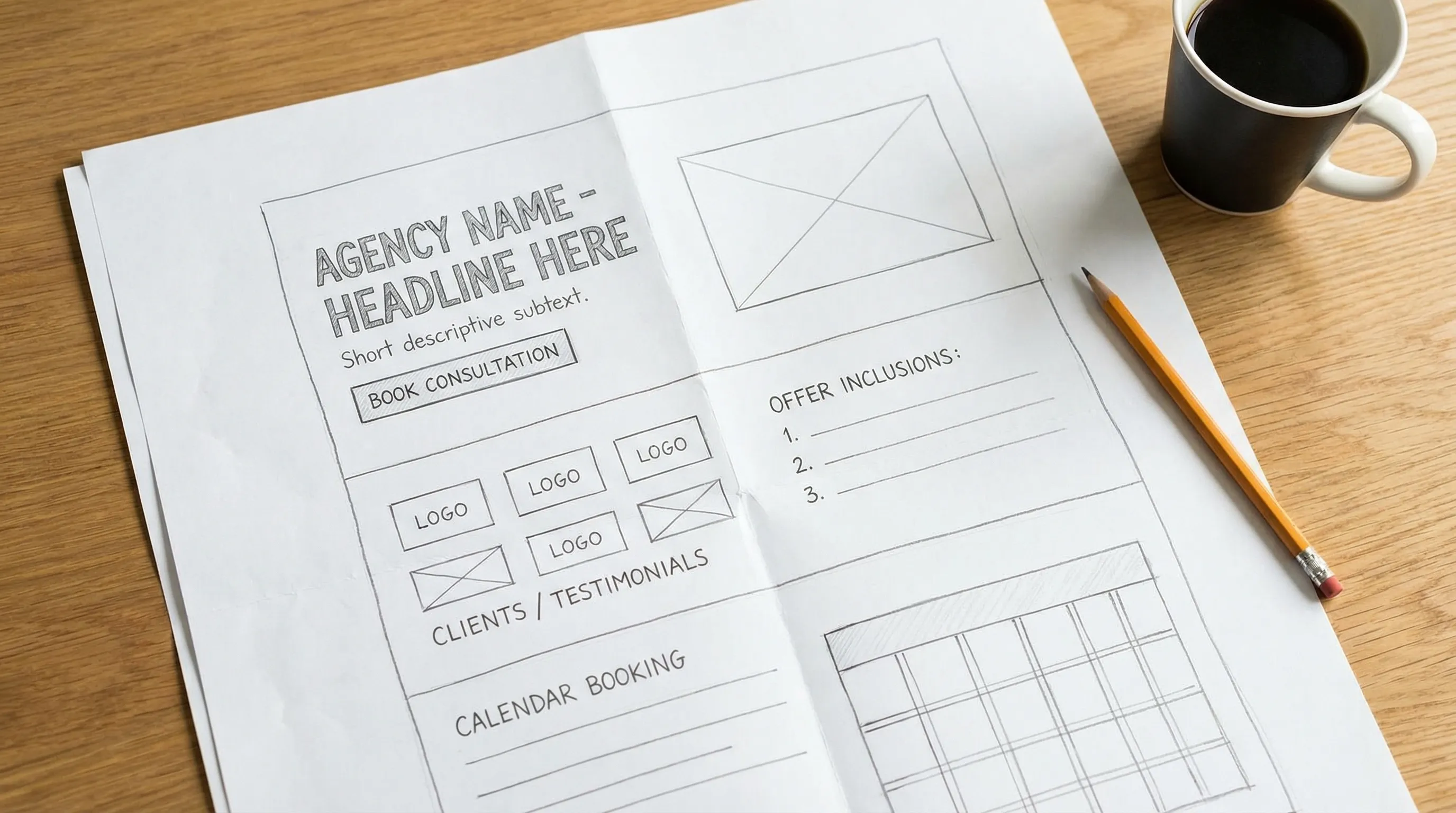
Implementation note: Put your calendar booking on-page, but also offer a fallback contact option for procurement-driven buyers.
Step 3: Pick one channel for 30 days (choose based on intent, not vibes)
To get leads this month, prioritize channels where people already have intent.
Here are three common options for service businesses, with a practical way to choose.
| Channel | Best for | Typical tradeoff | “This month” fit |
|---|---|---|---|
| Search ads (Google, Microsoft) | Buyers actively looking for a service | Needs good keyword hygiene and landing page | High |
| Retargeting (Meta, LinkedIn) | Capturing warm traffic already on your site | Requires existing traffic to work | Medium |
| Direct outreach + referral partners | Niche services with clear ICP | Requires daily consistency and tight targeting | High (if you commit) |
If you need leads fast, default to search intent
Search ads are often the most direct way to advertise services because the prospect is already telling you what they want.
Keep it simple:
- Build one campaign around your offer category (for example, “Google Ads audit” or “B2B paid social agency”)
- Use tight ad groups, and avoid overly broad keywords
- Add negative keywords early (examples: “free,” “jobs,” “course,” “template”)
- Optimize for one conversion (booked call or form submit)
Google’s own documentation is a good reference for conversion setup and measurement basics in Google Ads.
Minimal ad copy that tends to convert (service businesses)
You do not need clever copy. You need clear, specific copy.
| Ad element | What to write | Example |
|---|---|---|
| Headline | Outcome + service | “GA4 Tracking Audit in 5 Days” |
| Proof | Credibility cue | “Senior-led, no junior handoff” |
| Filter | Who it’s for | “For B2B SaaS and services teams” |
| CTA | One next step | “Book a 15-min fit call” |
Avoid: “full-service,” “360,” “we do everything,” and buzzwords you cannot prove.
If you have traffic already, add retargeting as a second layer
Retargeting works when you have enough visitors that did not convert the first time.
If you run retargeting on Meta, follow Meta’s latest guidance for Meta Pixel setup and events quality. Keep the retargeting message aligned to your offer card, not a generic agency pitch.
Step 4: Win on speed-to-lead (most service teams don’t)
A simple operational truth: the team that responds first, with clarity, often wins.
Your goal is to turn an inbound lead into a scheduled call quickly, then turn a scheduled call into a clear “yes/no next step” within 24 to 48 hours.
A response script you can reuse
Send this within minutes (or automate it):
Subject: Quick question about your (goal)
Hi (Name),
Thanks for reaching out about (offer). Two quick questions so I can route you correctly:
- What are you trying to achieve in the next 30 days?
- What platform is most important right now (Google, Meta, LinkedIn, other)?
If it’s a fit, here’s the link to book a short call: (calendar link).
Thanks, (Name)
Qualify for fit, not for ego
Use a simple fit grid. You are looking for “can we create value quickly” and “will onboarding stall.”
| Qualification area | What to ask | What you’re listening for |
|---|---|---|
| Goal | “What does success look like in 30 days?” | A measurable outcome, not vague awareness |
| Access readiness | “Do you control the ad/analytics accounts?” | Ability to grant partner access fast |
| Decision | “Who signs off?” | Clear owner, no hidden committee |
| Budget reality | “What’s the range you’re comfortable with?” | Avoids mismatched expectations |
| Timeline | “When do you want to start?” | Urgency and internal alignment |
Step 5: Make the “yes” frictionless (onboarding is part of advertising)
Most agencies treat onboarding as delivery. High-performing agencies treat onboarding as a conversion lever.
If a buyer says yes and then you spend days chasing logins, permissions, and IDs, two bad things happen:
- The buyer’s confidence drops (they start questioning the decision)
- Your time-to-first-value stretches (results arrive late, churn risk rises)
A simple way to fix this is to standardize Day 0.
The Day 0 handoff you want
Define one internal SLA:
Time-to-verified-access: the time from “contract signed” to “we can log in and confirm permissions across required platforms.”
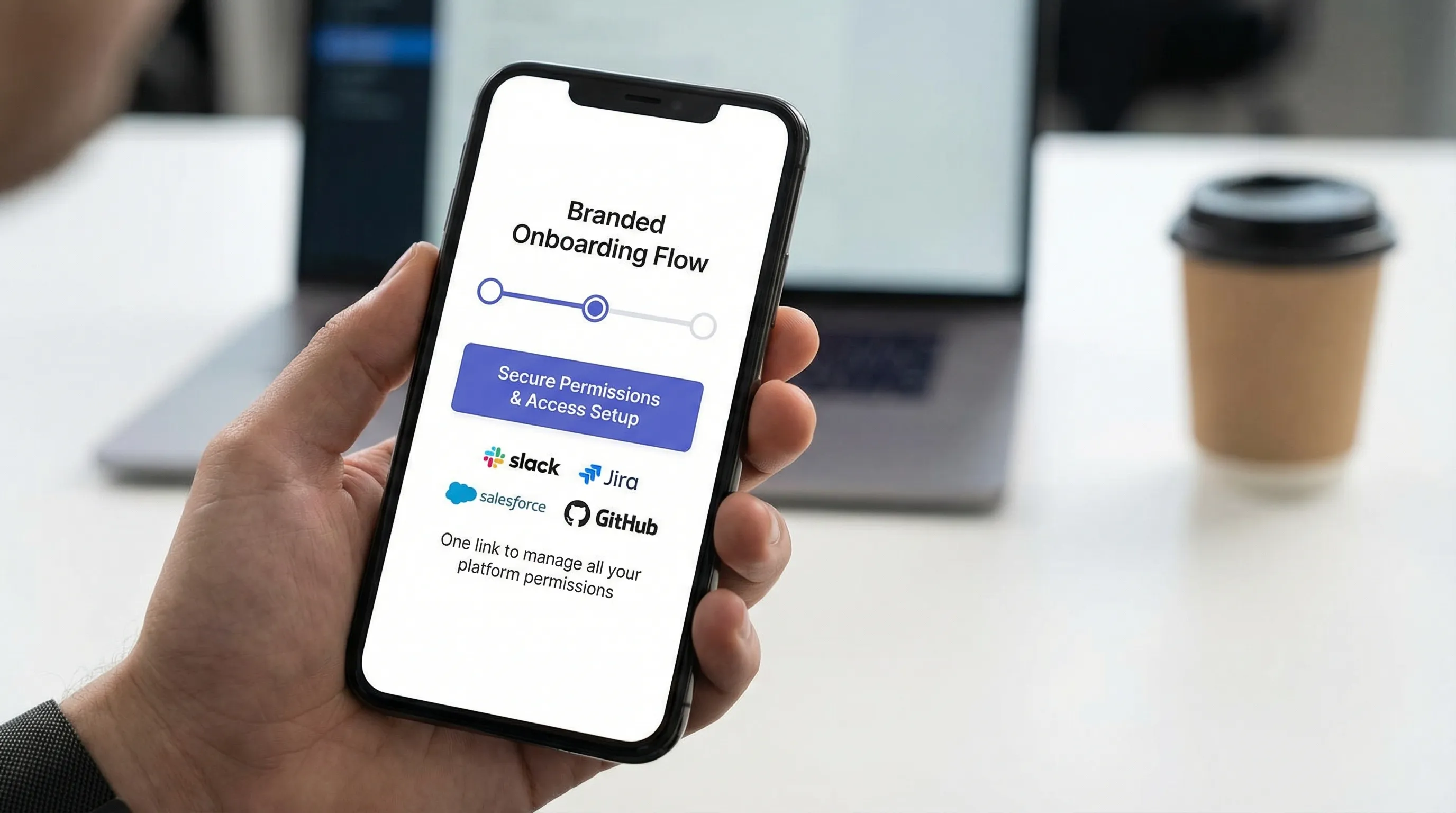
This is where a client onboarding layer helps. Connexify is built specifically for agencies and service providers to streamline onboarding with:
- One-link client onboarding (a single, branded link)
- Multi-platform support
- Customizable permissions
- White-label options
- API and webhook integrations
- Secure data handling
- No installation required
The point is not more software. The point is removing the manual steps that stall momentum.
If you want to see what a “one link” onboarding flow looks like in practice, you can book a Connexify demo or start with the 14-day free trial.
The weekly metrics that keep the system honest
Don’t over-instrument. Track a few numbers that tell you where the system is breaking.
| Funnel stage | Metric | What “good” looks like (directionally) | If it’s bad, fix this |
|---|---|---|---|
| Ads | Click-through rate (CTR) | Improving week over week | Offer clarity and ad relevance |
| Page | Landing page conversion rate | Improving with iteration | Page message, proof, CTA |
| Sales | Cost per booked call | Stabilizing or dropping | Targeting and page friction |
| Sales | Show rate | High and consistent | Confirmation, reminders, pre-call framing |
| Delivery | Time-to-verified-access | Hours to a day, not a week | Onboarding workflow and access requests |
You do not need perfect benchmarks to start. You need trend lines and a weekly habit of one improvement.
A 30-day rollout plan (simple enough to execute)
This is the execution plan to advertise services and get leads this month without boiling the ocean.
| Week | Outcome | What you do | What you measure |
|---|---|---|---|
| Week 1 | Offer + page ready | Write offer card, build landing page, set conversion tracking, prepare proof | Landing page conversion baseline |
| Week 2 | First leads | Launch one channel (search or outreach), respond fast, book calls | Cost per lead, booked calls |
| Week 3 | Better lead quality | Add negatives, tighten targeting, refine headline and proof | Show rate, qualified rate |
| Week 4 | More closes | Improve follow-up, standardize Day 0 handoff, remove onboarding friction | Close rate, time-to-verified-access |
The discipline that makes this work
For the next 30 days, say no to:
- Rewriting your website
- Launching three channels at once
- Adding more services to “sound bigger”
Say yes to:
- One offer, repeated everywhere
- One landing page, improved weekly
- One channel, committed daily
- One onboarding flow, built to keep momentum
If you want the fastest win: fix the post-sale gap
Many agencies can create demand. Fewer can convert it into confident, fast starts.
If your leads are saying yes but launches are slow, onboarding is the bottleneck, and it is solvable.
Connexify is designed to streamline client onboarding for agencies and service providers with a single branded link and secure, multi-platform access setup. If you want to reduce onboarding time from days to seconds and start delivering value faster, you can start a 14-day free trial or book a demo to see if it fits your workflow.